Showing posts with label Digital Humanities. Show all posts

Tuesday, 29 January 2013

Revolutionary Media in 'The Hunger Games' Trilogy

"It has become appallingly obvious that our technology has exceeded our humanity."
 (Albert Einstein) 
Although this posts' contents are a complete u-turn from my usual interests, I could not resist sharing my insights into the use of Digital Media in The Hunger Games Trilogy by Suzanne Collins. I was quite skeptical about reading these books, automatically categorizing them within the ranks of tween literature series' such as The Twilight Saga. There's nothing wrong with that franchise of books and films. I have read all of the books and watched all of the films; but I wasn't quite convinced of the hype, or the standard of writing (cough, cough!). However this particular series of books offer a departure from the traditional love story motif, by weaving a discourse on the over-saturation of digital media and the effects that technology can have on society.


The books are set in the dystopian world of Panem, in which an uprising has led to society being re-arranged into districts labelled one to twelve. Every year these districts must participate in a reality televised competition known as the Hunger Games. This reality tv show consists of a 'fight to the death' formula, in which two tributes from each district are chosen each year for the entertainment of 'The Capital'. The books developed an argument on the decay of morality which results from the over-saturation of media and technology upon society. The fact that the upper echelons of society in the books watch the suffering of others for entertainment, highlights this challenge to our interpretations of the power of media. The main character, Katniss, acts as a symbol throughout for the fight against this decay of media and technology.


These books carry a heavy political message on our responsibilities to use technology properly. After all, media can be the most manipulative weapon that we have in society. These three books, The Hunger Games, Catching Fire, and Mockingjay, are categorised as Science Fiction, which I would have to agree with, considering the heavy emphasis on technology throughout. The Independent's review of the books by Paddy O' Doherty describes them as follows:

The Hunger Games is a hybrid comprising many modern cultural references. It has the voyeuristic magnetism of the original Big Brother TV show, the deprivation and reward system of I'm a Celebrity ... get me out of here, the glamour of Next Top Model and the harshness and the tragedy of a war documentary.
The misuse of media throughout these three novels has contributed to the decay in society, which leads to a further uprising in the final novel and the abolishment of the dictatorship regime overseen by President Snow. The books are inspired by contemporary and antiquarian elements, which Collins talks about in interviews which she gave on the books. The classical inspirations are drawn from the Greek myth of Theseus and the Minotaur. On an annual basis, Athens has to send seven young women and men to Crete, who are put into the Labyrinth with the minotaur, to try and survive. The Contemporary inspiration for these novels is drawn from various reality tv shows. Collins talks about our "fascination with reality television", which she employs in the books to draw attention to the desensitization which is emerging due to our over-exposure in this mass digital media culture.

(Clay Shirky's talk on how the internet could one day transform the government, if handled properly of course!)

My main argument for these books is that they create a powerful dialogue upon modern issues in the use and abuse of technology and media tools, which could be detrimental to how we approach our future. Collins advocates a mindful approach to the use of media as a platform, instilling a belief through these books that in order to retain our humanity, we need to reinforce the real, and see the value in moral technology, rather than  demoralized technology for entertainment. The careful, monitored use of digital tools is something which I believe is essential to the prevention of their detrimental effects upon our perceptions of culture. However, this is not to day that media should be censored, rather it should be used for it's true purpose, to communicate and educate, rather than for mindlessness. These books have eluded to the fact that mass media consumption through technology is creating a sense of de-socialization and de-sensitization, which could in theory be a threat to how the social progresses. This is turn could effect how our cultural identity is formed.
Part of us is immersed in world culture, but, because there is no longer a public space where social norms could be formed and applied, another part of us retreats into hedonism or looks for a sense of belonging that is more immediate. . . both individuals and groups are therefore less and less defined by the social relations which until now defined the field of sociology, whose goal was to explain behaviour in terms of the social relations in which actors were involved (Public Connection Through Media Consumption, 251). 
While I recognise the perils of the influx of digital media, it also has had many rewards. I believe that navigation is a key issue, and the education of younger generations upon the navigation of this media is essential. Now to the comments. What are your thoughts upon this view purported by Collins? Have you read the novels or seen the film adaptation of the first novel? If so, what are your own views on them? Is social media our new society?


Works Cited

Couldry, Nick and Tim Markham. "Public Connection through Media Consumption: Between Oversocialization and De-Socialization?", Annals of the American Academy of Political and Social Science. Vol. 608 (2006). 251-269. Jstor. Web.

Monday, 7 January 2013

More Ramblings of a DH Novice

Does anybody know what Digital Humanities really is?
(Words highlighted in red are keywords within this piece.)


Looking at Digital Humanities from an outsider’s perspective is quite a daunting experience. There is a fundamental lack of a comprehensive, all inclusive definition for this movement, which cannot be ignored. The Digital Humanities novice faces a clear challenge in trying to navigate such a scholarly movement, without a proper road map for classification. Alan Liu supports this argument:
The Digital Humanities, clearly, are in a state of rapid expansion. But giving an account of that state of expansion without relying on anecdote is difficult. Empirical evidence of the field’s growth is uneven due to uncertainty about what exactly should be counted (programs, jobs, conferences, publications, projects, funding competitions, usages of the phrase ‘digital humanities’?) (The State of the Digital Humanities, 1).

The mapping of Digital Humanities is essential to its fruition as a contender for the ‘Humanities 2.0’. The first part of this process is to reach a level of agreement in terms of Defining DH. Perhaps this seems rather simplistic, but in actual fact it is quite a complicated wish for this discipline, as it contains so many different fields of thought, with conflicting approaches. The question remains as to how we can govern an interdisciplinary system, when there are different standards for the various different skill sets within this? This piece will examine the idea of whether the Humanities and I.T. can truly combine their scholarly ethics to create an answer to the waning influence of the Humanities in the Modern world.

Fusion is an interesting word to use when describing the Digital Humanities. It evokes both mechanical and artistic connotations, which in a sense is what DH is all about. In Digital Humanities we merge the digital with the artistic, literary, cultural, and scholarly world. This movement is about accessibility as opposed to exclusivity. It combines the traditions and skills of so many different areas within the arts, under the umbrella of I.T. Arguably, the Humanities have been looking for a new home for quite some time now, which they have found in the increasing manipulation of technology. The process by which this is occurring is one of skill sharing and co-operation. Perhaps this co-operation may seem slightly forced to begin with, but as time progresses it is hoped that it will become more fluid.  The rewards of the knowledge sharing economy are undeniable. It is how we use this ‘economy’ that will make the immediate difference in expanding the horizons of the arts.

There is always the fear that I.T. will overtake the Humanities as opposed to aiding its renewal. This fear requires dispelling through the further efforts of Digital Humanists to marry the two overarching fields. Unification is essential in ensuring the future of the Humanities. James O’ Sullivan has argued that:
 Digital humanities is more than the use of technology to display research findings in electronic form. Rather, it resides at the juncture between complex or novel uses of new media and traditional humanities research and artistic endeavour. It is concerned with the use of technology to reproblematise humanist questions, or oftentimes, the exploration of technology from humanist perspectives (What makes Digital Humanities, Digital?).
 It is important to mention some of the essential elements of this merge. For the text specialists there is TEI, the use of HTML and XML to digitise the body of text, and expand its parameters for interpretation. For the historians, the use of the database is a valuable way to interpret historical data for research. Graphic design is well catered for in this movement, for those artistically inclined. These are just a few brief examples of ‘new ways of doing things’ using technology. The visual element of data is now of equal import to the physical data, in analysing, interpreting and displaying research and development within this sector.

Virtual learning is fast becoming a central principle within DH. Digital Pedagogy absorbs traditional teaching methods and then transforms them in an online environment. Conceivably, this type of e-learning could revolutionise the way we teach and learn for the next generation. Arguably, if the humanities are to survive in this Modern, technology saturated era, the classroom or lecture hall, will have to move online. This is not to say that the physical act of teaching should be abolished. Rather, further digital learning facilities are needed to aid the rapid expansions in technologies which are impacting our education systems. Conceivably, this could be viewed as a lifeline for Humanities teaching and learning. It could also lead to further innovation within these fields and within pedagogy in general.

Page to stage is a concept which resonates within the Digital Humanities hymnbook. In this sense the humanities is moving from a closed book mentality to the stage of the world, through its usage of the internet as a central means for communication and publication. Jerome McGann has argued that we need to “reform the text through computer assistance to provide new insights” (A Companion to Digital Humanities, np). Limitation is something which could hinder the humanities cause. The internet provides the freedom which this sector has needed for quite some time in order to adapt to the ever changing needs of society. However the online world has rules too. It is not a completely free space by any means. The availability of information needs close regulation and strict observations of copyright laws. Credit has to be given where credit is due in order for success to be achievable. Perhaps what the humanities needs is a little help from its friends. Communities of practice provide new methods and new tools for analysis.

 There can only be further benefits to come from working with others to strengthen this movement. This can be determined as the quintessential core of the development of Digital Humanities. A solution was needed to the problem of the future of the Humanities. Although Humanities Computing has existed for decades before it was renamed in this vain, DH expands the parameters of possibilities which using digital aids for Humanities research can provide. It is encouraging innovative thinking and pure creativity in the use of technology to transform the Humanities.

Works Cited

Liu, Alan. "The State of the Digital Humanities: A Report and a Critique". Arts and Humanities in Higher Education, 11.1(2012): 1-34. Print. 
McGann, Jerome. A Companion to Digital Humanities. Ed. Susan Schriebman, Ray Siemens, John Unsworth. Oxford: Blackwell, 2004. Web. 
O' Sullivan, James. What Makes Digital Humanities, Digital? josullivan.org. Web. 

Sunday, 6 January 2013

'Vlogging': Digitizing the Personal to Educate the Public

Some may look at the title of this post and wonder what vlogging is. This post will explore the meaning and use of vlogging, and how this could be applied in an educational setting.


Firstly vlogging, quite like blogging is the activity of keeping a log of information via the medium of video. It has been used, essentially, as a video diary. This medium has become very popular on social media sites, such as YouTube.

Although its main occurrence appears to be in the United States, us Europeans are now getting in on the action.  An example which stood out when I was investigating occurrences of vlogging, was of the Irish couple, Jonathan and Anna Saccone-Joly, who vlog every single day, and have done so for the past two and a half years. This has included their wedding, the pregnancy and birth of their daughter Emilia, along with daily occurrences in their lives such as walking their dogs.


 Although this seems like a very intrusive idea, and some may well think that it is, it has benefits in terms of its application in an educational setting. After all, it has been very beneficial to the Saccone-Joly's, who are now YouTube Network Partners, and make their living from these videos.

I am not suggesting that we all bring our cameras along to school or college everyday to vlog the experience, but for group projects, presentations and much more, this could prove to be a useful tool for the dissemination of knowledge. Digital Humanities is all about the application of media tools within our education, so why not live by this motto in a more literal sense. It could also prove to be an essential element of publicising the work which is being done in the Digital Humanities sector.

An interesting site to have a look at is TubeTeaching. This site is run by Dr. Chareen Snelson from the Department of Educational Technology at Boise State University. Snelson runs a course called YouTube for educators, which applies the principles of vlogging to education.

Another site which advocates the use of vlogging for educational purposes is the desktop video section on about.com. This section looks at the benefits of video blogging for teachers.

The Benefits:

  • Educational activities: By letting students record and edit video you are teaching them valuable technological and artistic skills. It’s a fun and low pressure way for kids to become comfortable with electronics and computers.
  • Better communication: A vlog is a great way to let parents see what’s going on at the school and in your classroom.
  • A visual record: A vlog can be considered a video portfolio of the work that goes on in your classroom. It’s a concrete demonstration of your skills and those of your students, which can be beneficial for promoting the school or during teaching reviews.
These advantages are geared towards primary and secondary level students, but one could argue that they are also applicable in a third level environment.

I don't know if I have the confidence to pilot such a scheme single-handedly, but the use of vlogging could be rewarding for analysing the experience within a group project.


Friday, 28 December 2012

Blogs I Follow......


The Blue Lantern- For all things Modern/ Postmodern in nature. This is a beautiful blog full of little gems to discover everyday. Jane Librizzi brings life to these pieces through her intricate posts, littered with art and literature.
The introduction to this blog describes the reason behind the chosen title for this web-page:
A blue-shaded lamp served as the starboard light for writer Sidonie-Gabrielle Colette's imaginary journeys after she became too frail to leave her room. Her invitation, extended to all, was "Regarde!" Look, see, wonder, accept, live.
What I take from this introduction is that even though one might be confined to their room or to their bed, the use of the blog extends the realms of the imagination past the problem of location. This is the essence of the blog for me. It has been a great aid to me in my particular research interests, as it allows me to keep up to date with areas pertaining to the 19th and 20th centuries.


Sample Reality-  Mark Sample's blog blends his knowledge as a Professor in the Department of English at George Mason University with debates in the Digital Humanities. He is particularly interested in how DH is approaching contemporary literature within its research. He asks the question, is enough being done to include this field within DH and is innovation possible here?

 Mark's blog reflects his interest in open source pedagogy in particular. This blog has been very helpful for thinking about my own questions in relation to fitting Modern literature into the world of Digital Humanities. It has been reassuring to know that it is an ongoing struggle for many. It is also useful in terms of Sample's research in the pedagogy side of things.

Below is an example of the debates on pedagogy which are being waged within Sample's blog:

Training wheels are a kind of scaffolding. But they are intrusive scaffolding, obstructive scaffolding. These bulky metal add-ons get in the way quite literally, but they also interfere pedagogically. Riding a bike with training wheels prepares a child for nothing more than riding a bike—with training wheels.

Matt Wilkens.com- Like Sample Reality, Wilkens's blog focuses on marrying English literature with Digital Humanities. Although his blog has been slightly neglected of late, the posts which Wilkens has published focus upon the impact of areas ranging from theory to technology in English Literature research and study.
He has a detailed post relating to the construction of a syllabus for a graduate seminar in DH. I found this to be quite helpful for comparative purposes to my own postgraduate course.

I will link this post below:
Digital Humanities Grad Syllabus

To be continued........

Wednesday, 19 December 2012

'What The Water Gave Me': Woolf and Water.

I came across this post from my old e-portfolio, which I created for my MA in English last year. I felt that its sentiment was appropriate to my own adaptation to the world of Digital Humanities. Woolf adapts water in the same way to fit her writing style. This can be seen in nearly every single major work which she has written. However this piece focuses on a slightly dryer piece of writing by Woolf, set in the English countryside. The work that I am writing about is of course Between The ActsDH challenges the traditional written identity in the same way that Woolf uses water to mock the traditional novel format. Obviously, this movement challenges a whole lot more than that, but in terms of my own area of interest this fits the bill nicely.


Image courtesy of http://saltysbrainflash.blogspot.ie


Virginia Woolf's writing has had a lengthy relationship with water, or what could be labelled as ocean imagery. This post will examine the significance of water in relation to Woolf's work.
The title of this piece is taken from a 'Florence and The Machine' song of the same name, written by Florence Welch. Welch has surveyed the significance of water to Woolf. She cites Woolf's work as one of the main influences for this song.


What the Water Gave Me- Performed by Florence and The Machine.


"The ocean seems to me to be natures great overwhelmer. ...... "It's about water in all forms and all bodies. It's about a lot of things; Virginia Woolf creeps into it, and of course Frida Kahlo, whose painfully beautiful painting gave me the title." ( Florence Welch, Digital Spy)
The water can be analysed as a powerhouse for influence. Perhaps what the water gave to Woolf was an outlet for a new form of the novel. Many of Woolf's allusions to water or to the beach profess a change or a loss within the realm of the novel. She can be argued as adapting the novel to Modernism, in the way that water adapts to its surroundings.
Woolf clearly toys with this idea in her final novel Between the Acts. She mocks the 'traditional' novel form, which she suggests provides outdated and unimaginative representations of society. This is visible in William Dodge's observation of Isa and Giles' relationship, which was "as people say in novels 'strained' "(Between the Acts, 973).
The water of Woolf's work is all encompassing. It seems to engulf the majority of her writing, whether the setting is London, as in Mrs Dalloway, or the beach in Cornwall from Jacob's childhood in Jacob's Room. "The waves" in the water of Jacob's Room "showed that uneasiness, like something alive, restive, expecting the whip" (Jacob's Room, 13).  One could argue that this uneasiness centers around both the character and the form employed in the novel.


"It,(Jacob's Room), was Immediately hailed as a radically innovative text that broke with tradition and established the groundwork for a new kind of fiction: in its nonlinear modernity it was likened to a portfolio rather than a novel" (Francesca Kazan, 701).
Obviously this post cannot examine all of the references to water in Woolf's substantial collection of writing. However, from what has been discussed thus far, the water can be viewed as the creative process, which changes with the mood of her work, much like water does in reality, when it is disturbed or there is a change in the weather. It acts as a signifier for Woolf's uneasiness with what she was creating, yet at other times it provides a joyous sense of achievement with the unification of her ideal for a new type of fiction.
Therefore, 'what the water gave' Virginia Woolf was a podium upon which to calculate a distinct form of writing.The water of Virginia Woolf's writing offers an analogy for the struggle to create something new. When the "wave has broken", Woolf worries that something new may not be allowed to form. This is seen in Between the Acts, her last work.
"Dispersed are we, Isabella followed her humming. All is over. The wave has broken. Left us stranded, high and dry"(Between the Acts, 968-9).
Conceivably, the water was Woolf's attempt to open her work up to criticism, about the changing shape of its writing. There is a fearful voice inherent in the water imagery of whether Woolf has succeeded in changing the mould of fiction, or whether her work is drowning in its own failure.


Frida Kahlo: 'What the Water Gave Me'

As I progress in my MA in Digital Humanities, I am beginning to realise that if I am to achieve something from this degree it has to come from the marriage of my own interests with this movement. As I struggle to create an idea for my thesis, I have increasingly turned to my old favourites, such as Woolf and Djuna Barnes, to garner some inspiration. They created new landscapes of literature in the Modernist period which I am attempting to undertake in Digital Humanities. Ultimately, I want my thesis to be a representation of the creation of a new embodiment of writing, in quite the same way that these authors did in their own time.


Works Cited
Corner, Lewis. "Florence and the Machine debut new track: What the Water Gave me." Digital Spy. Hachette fillipaci Media. 31 Jan. 2012. http://www.digitalspy.ie/music/news/a336706/florence--the-machine-debut-new-track-what-the-water-gave-me-video.html. Web.
Kazan,Francesca. "Description and the Pictorial in Jacob's Room." ELH, 55:3 (1988). 701-719.  http://0-www.jstor.org.library.ucc.ie/stable/2873190. Web.
Woolf, Virginia. The Selected Works of Virginia Woolf. London: Wordsworth Editions Ltd, 2007. Print.

Tuesday, 4 December 2012

Evaluating Digital Scholarship: Experiences in New Programmes at an Irish University


Mike Cosgrave, Anna Dowling,  Lynn Harding, Róisín O’Brien & Olivia Rohan

While we have used digital research in teaching at University College Cork for many years, the central role played by digital artefacts in the new Digital Humanities programmes is a relatively recent addition. This pivotal shift  is new for both staff and students who, by the nature of new media technologies, cannot benefit from generations of received wisdom on assessment and evaluation. In this piece, we undertake a frank and personal investigation from both a pedagogical and scholarly perspective.

Experiences of DH: A Shikari’s Perspective
Assessing digital artefacts in academe is driven by the problem of grading the digital work being produced in our Phd and MA programmes in Digital Arts and Humanities.

When the DAH Phd consortium developed the proposal for a structured Phd, there was agreement that the outputs could include digital artefacts but no detailed discussion on what those might be and what criteria might be applied.

With that Phd in its second year and our own one year MA course in UCC in its first, this issue needs to be addressed in a very immediate way. Our students are currently working on digital products which we need to guide, and that guidance needs to be shaped by a clear awareness of what our expectations are, and how we will assess their digital work.

Disciplines not only have signature pedagogies, they also have signature assessments, and the skill of grading those is often handed down from generation to generation as an artisan craft. This is understood across the community of the discipline so external examiners have no problem validating the marks assigned in their discipline.  Colleagues who have never needed to explicitly consider grade descriptors or grading rubrics find it difficult to conceive of how one might grade an as yet undefined assessed digital object.

Grading is part art, and never wholly science, but in an interdisciplinary field like DH, where we must assess new types of student work, some frameworks are necessary. In the National University of Ireland, we have clear and well established guidelines in the NUI grade descriptors.   The descriptors clearly lay out, in a general, non-discipline specific way, the sort of ‘evidence of a mind at work’ we should expect at various grade brackets.

The NUI descriptors require no real modification for application to essays and other traditional work. Following on from traditional rubrics for “regular” student essays, people have produced countless rubrics for assessing blog posts and posting in discussion forums. These are, after all, written work and different from traditional academic writing mostly in extent, and sometimes in the formality of tone or voice.

When we move into less conventional forms, matters become more complicated. How do you assess a database, a critical edition, a performance, a piece of multimedia or an ‘app’?  
The optimal manner to build a relational database is, at one level, defined by a set of normalisation rules which are pretty clear and preclude, it seems, developing an argument. At another level, the choice of data to capture, the varieties of datatypes, indices and relations, are all driven by the questions which are informed by the particular inquiry being pursued.

Digital Artefacts - databases, corpora, and other things-  designed by different students for different inquiries can and should differ. One would expect to see individual choices about analysis and synthesis of the material to suit particular analytical questions being asked of the original raw, pre-digital material.

A common criticism of digital work is that “if it were a proper academic essay, it would of course have footnotes and so on” as if it was not a proper academic essay.  But a work like  ‘The Phoenix Tapes’ are a very fine collection of six essays on Hitchcock: they choose themes, extract examples, arrange those examples in a structure which includes a clear progression from introduction through development, to show the often horrific end result of the obsessions, highlighting along the way the manner in which Hitchcock visually expresses these themes.

If we skate over the detail that the original footage was not digital, the Phoenix tapes are an artefact, an essay of sorts, albeit in a medium which doesn’t easily permit footnotes. Nevertheless, submitted with a copy of the script, including references,  they should, under the NUI grade descriptors, merit a clear first class mark.

Part of our problem with assessment of digital artefacts is that many academics have never explicitly considered their instinctive grading rubrics. When challenged in discussion on a particular essay, most academics can explain why they gave it the assigned mark, but do not have a set of grading rubrics to hand, nor do they provide students with copies of grading rubrics at the start of courses.  

As leaders in Digital Humanities, we are asking our students to leave accepted pathways and march into the desert; we have a responsibility to know enough to help them draw a new map.  


Experiences of DH: An apprentice’s perspective

Introduction
This piece will focus on personal experiences of recent entrants into Digital Humanities (DH) scholarship thus far, setting them in a framework of evaluating digital scholarship as learners. It will highlight the challenges faced by DH novices in assessing scholarly literature. It will also refer to the digital tools utilised in scholarly endeavours and publications, while synopsising how these have affected learning to date. Instead of focusing on the technical shell of standardising evaluation and assessment of digital scholarship, this piece will concentrate on the innards of the issue; that is to say the main principle of a free-form approach which will guide evaluation as opposed to regulating it.

This is particularly indicative in the language used to discuss and communicate within the current digital humanities, as well as the audience’s reading when engaging with, not only the written material, but meaning-making in general.

Current debates in the field of the digital humanities about the divergent
practices of ‘close’ and ‘distant’ reading are really a screen for deeper changes
called for by the advent of new media. Digital technologies do more than propose
new ways of thinking, as did theory; they require new modes of being (Schreibman 126).

DH Identity: Different Voices
The 2010 DH Conference saw Kathleen Fitzpatrick define Digital Humanities as a “nexus of fields within which scholars use computing technologies to investigate the kinds of questions that are traditional to the humanities, or . . . who ask traditional kinds of humanities-oriented questions about computing technologies”. It is this unrestricted classification that makes DH such an attractive field, but also, unsurprisingly, presents problems for students who wonder whether their contribution is a valid one. For instance, words like collaboration, TEI, temporality, remediation, and xml have been passed back and forth in our classes, while taking for granted the fact that we were all aware of their meanings.

Depending on who you read, DH is a minefield: it can be riddled with “charlatanism . . . that . . . undersells the market by providing a quick-and-dirty simulacrum of something that, done right, is expensive, time-consuming, and difficult” (Unsworth); consequently, the most earnest of students, worried they may be tarred with such a brush, can experience what Mullen terms “digital-humanities impostor syndrome”. The desire to be certified and qualified in something jars with the field’s characteristic lack of structure, and many students require an awareness of the workings of assessment and evaluation to feel secure in their chosen area.

Arguably, trying to find a sense of identity in the digital world presents one of the main struggles which has led to the emergence of Digital Arts and Humanities. After all, the Humanities need to carve out a digital persona just as much as any large corporation, in order to make their presence felt in an ever-changing digital atmosphere. There is a sense of not wanting to be left behind evident in this move into the realm of I.T. Jaron Lanier explores this concern in his book, You Are Not a Gadget. His concluding thoughts express this Humanist need to stay true to oneself while entering into the digital:

The most important thing about postsymbolic communication is that I hope it demonstrates that a humanist softie like me can be as radical and ambitious as any cybernetic totalist in both science and technology, while still believing that people should be considered differently, embodying a special category.


Encountering evaluation
From the beginning of the Masters Degree in Digital Arts and Humanities, an open-minded approach to scholarship was promoted. A first encounter was with digital publications of literature, and the second was in the setting up of academic blogs for the purpose of open, online discourse.

It was at these two points in this year’s scholarly endeavour that the issue of criteria for standards of evaluation was raised, namely:

1)      What are the standard practices in digital scholarship?
2)      What is the “right” form of best practice with regard to these standard practices?
3)      What are the standard practices for research in particular?
4)      How should a student evaluate standards of literature?
5)      What are the standards expected in our own online text communication in the higher level environment?

The opportunity exists to also set a precedent for intervarsity communication. If seized upon, and the result acknowledged by each institution, this chance could provide students with a wider pool from which to form connections, build projects, and review each other’s work on a structured basis (though still less formal than official journals), as the community grows cumulatively larger. In this collaborative sense,  DH encompasses the acknowledgement that the physical days of education can no longer stand alone as a means for learning.

Last October’s DRI National Survey of the Humanities and Social Sciences saw one respondent state
[w]hen I see the word[s] Digital Repository Ireland, I would expect to find born-digital records are stored there and preserved there so that they can be migrated forward into new formats and then preserved and made accessible at the right time. And I really think that is where the gap is more than any other gap.

The demand is there for Ireland to stockpile and standardise – not homogenise – digital scholarly work. In relation to library archiving systems, the report notes one institution’s emphasis on being aware of any “broad national perspective on things...so if there are a lot of institutions moving...[in the same direction], we would move in a very coherent way’”. As Priego writes, “core critical and practical skills applicable to a wide variety of web tool scenarios would be a great thing to have a structured, recognised framework for”.


Digital tools
It soon became clear that standard practices in carrying out digital scholarship include technical skills and digital tools such as XML, TEI and databases. There is also an array of less daunting tools that are available to postgraduate students for research in any discipline. The problem lies in the fact that the sheer volume of digital tools can, at times, make the DH realm awkward to navigate. To this end, a general, online, instructive directory, with general guidelines to popular software or particularly useful blogs would - though perhaps tedious to maintain and regularly update - be a great help.  Self-directed learning, while expected at a postgraduate level, can become problematic if the student feels he or she is left without a map. With the imposter complex facing many at the beginning of their DH explorations, how can we implement a structure that will reassure the budding Digital Humanist that, by the end of her studies, she will be qualified to actually do anything?

The solution, as with any set of tools, is to be discerning in one’s choices; rather than indulging in experimentation for its own sake and at the risk of confusion, one should build up to a knowledge of more esoteric tools. The following are some examples which have featured in our academic involvement this year, and which have a strong possibility of becoming standard practice for pedagogy and reflective learning outside of DH, that is if their value can be demonstrated to institutions. When evaluating Digital Humanities, the benefits cannot be ignored.

Moodle, for example, acts as an online classroom and discussion forum, allowing a significant depth of reflection on course material. Similarly, Blackboard acts as a virtual library for course readings, as well as being another forum for discussion. Tools such as Skype and Google Hangouts enable the perimeters of the classroom to be endlessly extended; similarly, the eReader has now gained widespread availability. Even those who do not shop online are now inundated by its display in their local Tesco.
Clearly, the process of reading and learning has, to paraphrase Yeats, “changed, changed utterly”, but is this change a “terrible beauty” (The Collected Poems, 193), or welcome evolution? D. Randy Garrison’s E-Learning in the 21st Century summarises the change in educational focuses which one can argue that DH represents: “To be constrained by the restricted frame of traditional classroom presentational approaches is to ignore the capabilities and potential of e-learning” (54).


Process
As the first academic term nears its end, MA DAH students have already started to shed insecurities about personal judgement in assessing academic literature. Learning that the reader’s response to literature is not a trivial feature in terms of assessment of the quality of its contribution to a digital library was a formative experience. One may not feel practised in the art of evaluation, however it is true to say that there is worth in every reader’s response. No matter what form the scholar’s interpretation takes, the exercise of assessing literature for its scholarly worth is a vital part of the process of handing responsibility back to the learner and relates directly to the vital strive for experiential learning. The student not only learns how to identify insightful literature, but also takes the early steps in laying a foundation for their own autonomous learning.

What does all this mean for the evaluators? How can any individual possess the abilities to work and evaluate across such a broad spectrum of practise? The issue of interpretation and intended meaning requires further interrogation and greater development through discourse.  According to Schreibman, Mandell, and Olsen (2011), humanities scholars are, for the most part, “ill equipped … to recognize the scholarship” or the “intellectual content” of projects in which theoretical and technical choices inform project design. This issue is highlighted in Clement’s “Half-Baked; The State of Evaluation in the Digital Humanities”, in which she asserts that academic works relating to evaluation in the digital humanities have given rise to “a conversation that has very few listeners or readers in the humanities capable of appreciating the scholarship represented in this interdisciplinary work” (2012). This is supported by Browner (2011), who states that“[o]wning a computer and being able to click on a link is only the first and perhaps most easily addressed issue in assuring a real democracy of knowledge. Having intellectual access is much harder”.

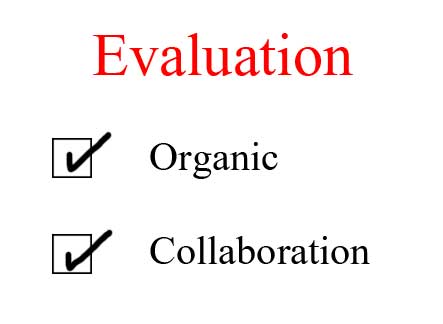
On that note, there are three main features of scholarship which encapsulate the main characteristics of the process of learning in the backdrop of web 2.0. Each one is spurred by the use of digital tools, such as the aforementioned blogs. These are:

1)      Independent learning
2)      Collaboration
3)      Insightfulness

In order to assess the understanding of a scholar, one must also assess their cognitive presence, both in terms of critical thinking and discourse. An important point of reference in evaluating this is the Practical Inquiry Descriptors and Indicators model, as illustrated below and in D. Randy Garrison’s “E-Learning in the 21st Century – A Framework for Research and Practice” (52).


Garrison suggests that “practical inquiry is the model within which we operationalize and assess cognitive presence” (51). The aim is to offer “a practical means to judge the nature and quality of critical reflection and discourse in a community of inquiry”. The question of standard is, understandably, a hot topic for the budding digital humanist in particular, given that there can be such disparity between articles, studies or blog entries that all file themselves under the same DH umbrella. By using a related, but less fixed, model in evaluating digital scholarship, we can tread the middle ground between a laissez-faire stance and a forced setting in stone of standards. One should not establish a system of rating but as an alternative examine the qualities already expected from scholarship and simply allow these to standards to homogenise in a digital setting.

Accessibility is a characteristic that must be stamped on digital scholarship. This applies to scholarship both in terms of publication of literature, and also the accessibility of data for the purposes of XML analysis. Without accessibility of data, information is as useful as a piece of chalk on an interactive whiteboard. The notion of access must be a guiding light for one’s own academic goals, to make a conscious move to live and breathe accessibility, thus exposing one’s work for the theoretical benefit of the academic community and allowing standards to grow from it.

Not only must the situation of ‘intellectual access’, or as Stefiks terms it “sensemaking”(Liu, 2011), be remedied through education and an increased academic and industrial awareness, but a more urgent predicament must be answered, in fact demands a response; “a reader could easily ask of these books what humanities scholars everywhere consistently ask of DH writ large: So what? Is that it? And what does this have to do with our research?” (Clement, 2012).The origin of this issue of relevancy may stem from a predicament identified by Bartscherer and Coover (2011): “scholars and artists understand little about the technologies that are so radically transforming their fields, while IT specialists have scant or no training in the humanities or traditional arts”. Is it any wonder that a difficulty has arisen with regards to evaluation and perceived value within the digital humanities?

Previous university graduates will have had an understanding of the requirements of a postgraduate degree. However, web 2.0 has modified the reality of higher level academia, and offered an opportunity to reshape the traditional structures in education. In the MA DAH at UCC, the digital evolution has been fully embraced as an appropriate setting for the rounded learning of a 21st century student in line with communities of practice. The campus is now both physical and virtual. Web 2.0, and social media in particular, has changed the reality of the academy into a virtual experience, with room for immediate distribution of relevant, up-to-date knowledge. Such practice is essential to the promotion of accessibility. It is up to scholars to harness the energy of web 2.0. However, the linking of scholarship with the digital realm is an individual choice that each researcher will have to make.

Collaborative-learning environments, and the learner as a sounding board for standards, may be the main catalysts in the development towards an empowered learner and an adequate set of learner-centred standards, as opposed to the decree of an elite crew. In other words, e-learning should be part of an organic process in terms of developing standards for evaluation of scholarship in all its digital manifestations. In order for this to be fully realised, one must begin at the first marker of making accessibility an integral part of the academic world, or, in other words, a widely accepted standard.

An area which stirs up an array of controversy is the use of blogging within Digital Humanities, and indeed education in general. Issues exist surrounding the question of whether the blog can be considered a legitimate tool for research, or citation in an academic paper. The reality is that an amount of time and effort, equivalent to that which is being put into scholarly publications, is now being directed into the blogosphere. Alan Liu offers an entry point for such examples of social media to become more respected:

In the digital humanities, cultural criticism–in both its interpretive and advocacy modes–has been noticeably absent by comparison with the mainstream humanities. . . . How the digital humanities advance, channel, or resist the great postindustrial, neoliberal, corporatist, and globalist flows of information-cum-capital, for instance, is a question rarely heard in the digital humanities associations, conferences, journals, and projects with which I am familiar (Where is Cultural Criticism in The Digital Humanities, np).

Engagement with more thoughtful scholarship which directs itself towards cultural criticism could strengthen the consideration of blogs and other social media tools for DH scholarship, through the fusion of discussions of data use with cultural commentary. Social media is fast becoming the leading publishing house for new material. Could one go so far as to argue that web 2.0 is the Humanities life-support system?


Evaluation
In terms of our experience of evaluation, there are several sides to evaluating literature, many of which were encountered through e-learning by the questions that were raised:

     1)       How does one identify insightful literature, and how do we develop insight  in our own online contributions?
2)      What is the etiquette of text communication as a scholar?
3)      Will knowledge be diluted when presented in digital form?
4)      Will design distract from data?

In assessing digital scholarship, the following points are also taken into consideration:
1)      What is the relationship between literature and communities of practice?
2)      Is literature always best served in an Open Access type of environment?
3)      Is digital information impermanent or simply up-to-date?

Price (2011) takes this issue a step further when it is revealed that this issue of evaluation and perceived relevancy carries right up the academic ladder to “tenure and promotion committees [that] have a notoriously difficult time in the humanities with multi-authored projects (characteristic of digital humanities projects)”. Clement (2012) supports this, indicating “And so the game continues: players lay their claims on the table and the winner is the person who makes the claims deemed most insightful by respondents”.  Another significant hurdle against progress in adopting a new system of evaluation is indicated by Browner (2011): that “the habits, biases, power centers, and economics that shaped print over the last 500 years are also shaping the digital world”.

There needs to be some synergy between disciplinary standards of governance and the increasing use of more liberal forms of research using technology. Julia Fraser conceives that “digital humanities as a whole has revealed precisely how interwoven and mutually consequential 'technical' and 'disciplinary' standards often are” (Collaborative Research in the Digital Humanities, 68). DH demands these sectors strike the right balance when merging in research.

Conclusion
Some of the questions raised in evaluating broad-spectrum scholarship can be applied to any form of learning. However, most disciplines now collide with the challenges and enhancements of digital scholarship. In the MA DAH, feedback from teachers and interactivity through virtual text and verbal discussion allows standards to form in an organic way. This is the radical crux of the argument: that defining digital standards in any form should come from those who both produce scholarly outputs and read them. To do this, one cannot simply hypothesise. Instead, one must tear down speculation and examine the plain evidence. One must then share this knowledge in order to establish a true form of best practice, as derived from pedagogical practices, and, perhaps more importantly, our own innate learning experiences. If one shares these models of learning, instead of theorising ad infinitum, one will be able to demonstrate their actual implementation on a personal level and therefore on realistic terms.

In reality, the basic criteria for assessment and evaluation will reflect the standards which have always existed in any form of scholarship, including a cohesive, well-formed argument, presented in an accessible manner. It is not for scholarship to be clinically assessed in any hypothetical way; rather, feedback can be drawn from an existing set of evaluation principles, and refined to establish a pattern of acceptable forms for the digital version. Creation, data, collaboration, innovation and publication appear in new media forms, but the core elements of best practice remain the same, regardless of the medium. While digital scholarship allows for an enrichment of existing principles, the most important category that we cannot neglect is again the accessibility of work to all interested parties, as this is where standards of evaluation and assessment are born.

Part of the Digital Humanities utopian view is that of a democratic world of collaborative, open source, non-hierarchical understanding. As Professor William Pannapacker conveyed, “with leaders who have never known a time when scholarship in the humanities wasn’t in crisis, DH is moving us – finally – from endless hand-wringing toward doing something to create positive change throughout academe”. If we smother DH and digital scholarship’s free-form, shape-shifting attributes by attacking scholarship and delving into the task of structuring standards, we are treading the dangerous ground of inhibiting the organic growth thereof, and consequently stifling digital scholarship and goals of accessibility. Although organisation is a necessary feature of scholarship, we first need to start with a hands-off approach and make adjustments along the way where necessary. After all, the internet began as a communication device - what if we had tried to tighten our grip and to slam it down with definitions of its existence? To use an artistic analogy, instead of enforcing a theme of standards, we need to move towards freeform brushwork and bring out the features of optical art, which mutates before our scholarly eyes.

Clement (2012) takes a positive posture with regard to “Interdisciplinary conversations, on the other hand, are much harder: they are fruitful and productive when, in our attempt to understand each other, we produce knowledge”. while Spiro and Segal (2011)  when investigating the field of digital scholarship in American literature, observed that  within digital humanities scholarship ‘using’ digital infrastructure provides for more innovative scholarship than ‘making’, and Judith Donath (2011) who likened the current changes in scholarship within the digital humanities as a mutation, where “the richness of life comes from a myriad of accidental yet advantageous mutations—at the cost of the many that failed. As we enter the digital era, we are able to program the level of risk we are willing to take with unexpected changes”.

Digital Humanities is a field in transit. It is moving from a world of constraint to a world of scholarly freedom. So far, DH appears to the novice to be a culture of collaboration and experimentation. Perhaps it is too early to pinpoint what exactly it is; or, perhaps, what new material regularly unfolds persists in proving the field too rich to be confined by definition. The solution for the novice may be to content herself, for now, with the uncertain process of trial and error. It is up to us all to work out how to navigate this transition in a thoughtful, cautious manner.

Works cited
Bartscherer, T.R. Coover, Ed. Switching Codes: Thinking Through Digital Technology in the
Humanities and the Arts, Chicago: University of Chicago Press, 2011. Print.

Browner, S.P. “Digital Humanities and the Study of Race and Ethnicity”. Earheart and
Jewell. 209-28.

Cohen M. “Design and Politics in Electronic American Literary Archives”. Earheart and
Jewell. 228-49.

Deegan, Marilyn, Willard McCarty. Collaborative Research in the Digital Humanities: A
Volume in Honour of Harold Short. Surrey: Ashgate Publishing Ltd, 2012. Print.

Earheart, A.E., A. Jewell, Eds. The American Literature Scholar in the Digital Age. University
of Michigan Press and University of Michigan Library, 2011. Print.

Garrison, D. Randy. E-Learning in the 21st Century: A Framework for Research and Practice.
New York: Routledge, 2011. Print.

Gold, Matthew K. Debates in the Digital Humanities. Minnesota: University of Minnesota P,
2012. Print.

Lanier, Jaron. You Are Not A Gadget: A Manifesto. New York: Alfred A.Knopf, 2010. Print.

Liu, Alan. “Where is Cultural Criticism in the Digital Humanities”. The History and Future of
the Digital Humanities. Modern Language Association Convention. Los Angeles, 7
January, 2011. Web.

---, “We Will Really Know”. Bartscherer and Coover. 89-94.

Price K. M. “Collaborative Work and the Conditions for American Literary Scholarship in a
Digital Age”. Earheart and Jewell. 9-26.

Rockwell, G. “On the Evaluation of Digital Media as Scholarship”. Profession 1(2011): 52-68.
MLA Journals. Web. 24 Nov. 2012.  <http://www.mlajournals.org/doi/pdf/10.1632/prof.2011.2011.1.152>

Schreibman, S., L. Mandell, S. Olsen. “Evaluating Digital Scholarship: Introduction”.
Profession. MLA Journals. 1(2011):123-201. Web.

Spiro L., J. Segal. “Scholars' Usage of Digital Archives in American Literature”. Earheart and
Jewell. 101-24.

Yeats, W.B. Richard J.Finneran, ed. The Collected Poems of W.B.Yeats. New York: Simon and
Schuster, 1989. Print.


About the authors

Mike Cosgrave teaches Digital Humanities, International  Relations and History at UCC. His Phd was on UN peace operations and he has published on teaching and learning. (m dot cosgrave at ucc dot ie )

Anna Dowling is currently studying for a Masters in Digital Arts and Humanities in University College Cork. She has previously completed a BA (Joint Honours) degree in English and History, and a Masters in Modern English in University College Cork.

Lynn Harding is currently studying for a Masters in Digital Arts and Humanities. She also holds an MA in Medieval and Renaissance English, and BA (Joint Honours) in English and History, from UCC.

Róisín O’Brien is currently studying for a Masters in Digital Arts and Humanities at University College Cork. She previously graduated with a Masters Degree in Applied Linguistics and a BA (Joint Honours) Degree in German and French.

Olivia Rohan has a degree in Fine Art and History of Art (Joint Honours) from the National College of Art and Design, Dublin, Ireland, a HDip. in Psychology from Trinity College Dublin, and is attending University College Cork on the MA in Digital Arts and Humanities.