
Showing posts with label Plagiarism. Show all posts

Tuesday, 27 November 2012

DH and Gaming: Closer than we thought?

So I'm not really much of a gamer, the furthest my foray into the world of gaming went was The Sims (1,2,3). I have to admit though, I was quite obsessed with those games. For me it has become a case of simply not having the time to appreciate the world of gaming. For the last five years I have bounced from one degree to the next, which really eats into your 'me' time.


However, I have recently discovered a game which has been getting a lot of attention on the web. I'm probably, most definitely, late to the game on this one but I was interested in it from an open access perspective. The game in question is Slender. This is a prime example of good quality, FREE gaming. Did I mention it's free to download! And no I am not being paid to promote it. I am a big horror genre fan, so the concept of the game piqued my interest immediately. The premise of the game is to travel through a forest in the pitch black of night, gathering 8 pages from various locations, while all the while trying to avoid being caught by the 'Slender man'. It also includes very eerie music which increases in volume as the Slender Man draws near to you, and the tendency for your flashlight to fail at this exact moment.

The creation of the legend of the Slender Man is described on the games homepage. Although the creator is named as Victor Surge, it shows the manipulation of forums and blog threads to create something sharable:
 The Slender Man was created at the Something Awful Forums in a thread entitled "Create Paranormal Images." He is described as wearing a black suit strikingly similar to the visage of the notorious Men In Black, and as the name suggests, appears very thin and able to stretch his limbs and torso to inhuman lengths in order to induce fear and ensnare his prey. Once his arms are outstretched, his victims are put into something of a hypnotized state, where they are utterly helpless to stop themselves from walking into them. 
(The Slender Man)

Not only is this game an example of the power of collaborative efforts  via the 'Something Awful Forums', but it shows the incredible work which is being done in terms of open creative endeavours.


It also encompasses some key elements of the movement in digital humanities: Interdisciplinarity, collaboration and creativity. Examples of these functions can be seen in the assembling of the Slender Man story. Aspects of the digital manipulation used in the paranormal pictures photoshop competition run on the Something Awful Forum, Cabadath from the Chzo Mythos games, and German folklore tales about Der Grobmann, often translated as the tall man, all influenced the creation of this game (Slender Man-Know Your Meme).
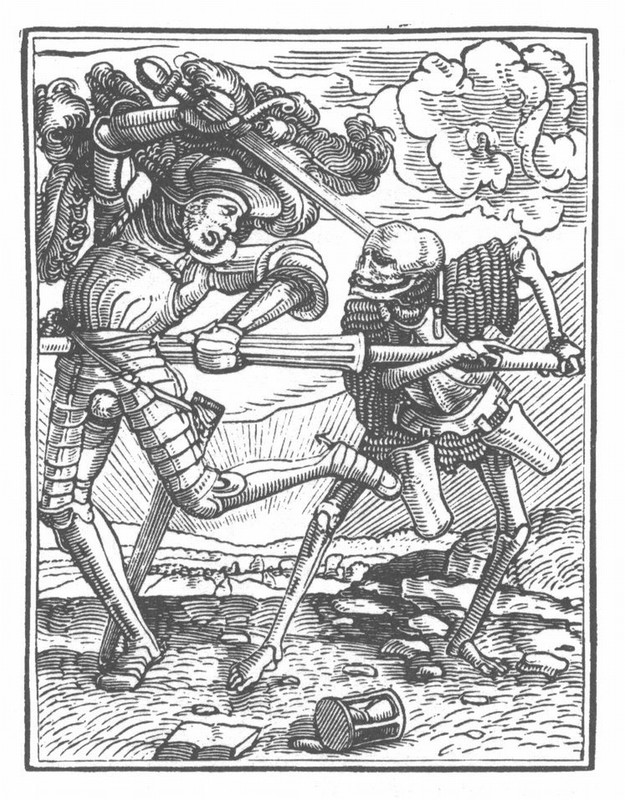
(Der Grobmann, from German folklore tales)

Personally, this game conjured images of Jack Skellington from Henry Sellick and Tim Burton's A Nightmare Before Christmas (1993). 

It also links rather nicely to the argument that I was making in my last post about the purpose within Digital Humanities of Deforming for Reforming, or what I like to refer to as digital flattery. In this sense, I would argue that this game was conceived of through the deformation of various representations of this tall figure and folk tales about such figures, in order to create a new digital, gaming version of this figure. 

The site which hosts the game also provides connections between DH and the gaming community. It seems that DH has taken a lot of inspiration from the world of gaming, in terms of their methods of communication and discussion. The forum, is now a large part of the gaming culture, in which tactics can be discussed and help can be received to get past a certain level. This site houses a very well frequented forum which would put many DH forums to shame. 

So next time you DHers play your games, whether on your console or online, remember that you are contributing to the long relationship which exists between the world of gaming and its influence on concepts within Digital Humanities.

With thanks to the Slender Man game for influencing this post.

Tuesday, 20 November 2012

Deforming For Reforming

To many, Las Meninas represents one of the most dynamic, multi-layered and complex examples of artwork. It has received so much attention, that it has garnered recreations by the likes of Picasso most famously. However, I am not interested in discussing fine art in this post. I am interested in how the transmission of this work in its different forms ties into what digital humanities represents.


It struck me while examining Picasso's interpretation of Las Meninas, the 1656 painting by Diego Velazquez, that at the root of what digital humanities represents to me is the deconstruction or disassembling of the image, the text, the sound, etc., in order to reform the core of humanities frameworks.


                                                  (The original Velazquez Las Meninas)

In essence what this transmutes is a type of deforming in order for reforming these categories. This is not to say that the original form is destroyed, rather it is rediscovered in a new arena. The core values have not changed, just the transmission of the idea. Many may call this remediation, but I am not entirely convinced of this words application yet in terms of digital humanities aims. I do not think that the original item, such as the text, needs remedying by digital means. I believe that this process serves to translate the book or the artwork into a more interactive format. I also believe that this extends the reach of these previously physical constructs.

 (The Picasso Version)

You may ask what does this have to do with the aforementioned paintings? The answer to this, I propose, is that they are essentially just different versions of the same concept. They have both developed out of creativity, just different versions of this creative process. Picasso has deformed Velazquez's original painting in order to reform it in a modernist context. Conceivably, we have moved into a digitally saturated context, therefore these concepts have moved with that in the same way. This process not only shows the translation of a form through history, but it symbolises the constant re-invention of space using the digital.

At the centre of this is the reformation of an idea, for its further development. So that Velazquez and Picasso's versions, in digital form are allowed to take on new dimensions:


These reconfigurations conjure notions of the dreaded plagiarism for many. However 'the anxiety of influence', as Bloom puts it best, does not take into account the disassembling of one idea in order to reform this idea in another mode. Don't get me wrong, I am not advocating plagiarism, I just believe that it's definition is not clearly dealt with in terms of some elements of DH thus far. If this was the case, would we not all be guilty of plagiarism in some form, by re-instating physical works on the web, with our name attached to the coding? While discussing Bloom's most famous work, Robert McCrum from The Guardian, argues that "influence is unavoidable, and not all of it is bad".

It is my opinion that DH thrives on influence, but it recreates this in a digital context. To conclude this post, I would like to pose the question, Is the Humanities undergoing a digital reformation? Answers in the comments.

Works Cited

Bloom, Harold. The Anxiety of Influence: A Theory of Poetry. Oxford: Oxford UP, 1973. Print. 

McCrum, Robert. "Harold Bloom's Influence Still Holds Sway", The Guardian. 25 May 2011. Web Article. www.guardian.co.uk

Picasso, Pablo. Las Meninas. Barcelona: Museu Picasso, 1957. Image.

Velazquez, Diego. Las Meninas. Madrid: Museo Del Prado, 1656. Image.